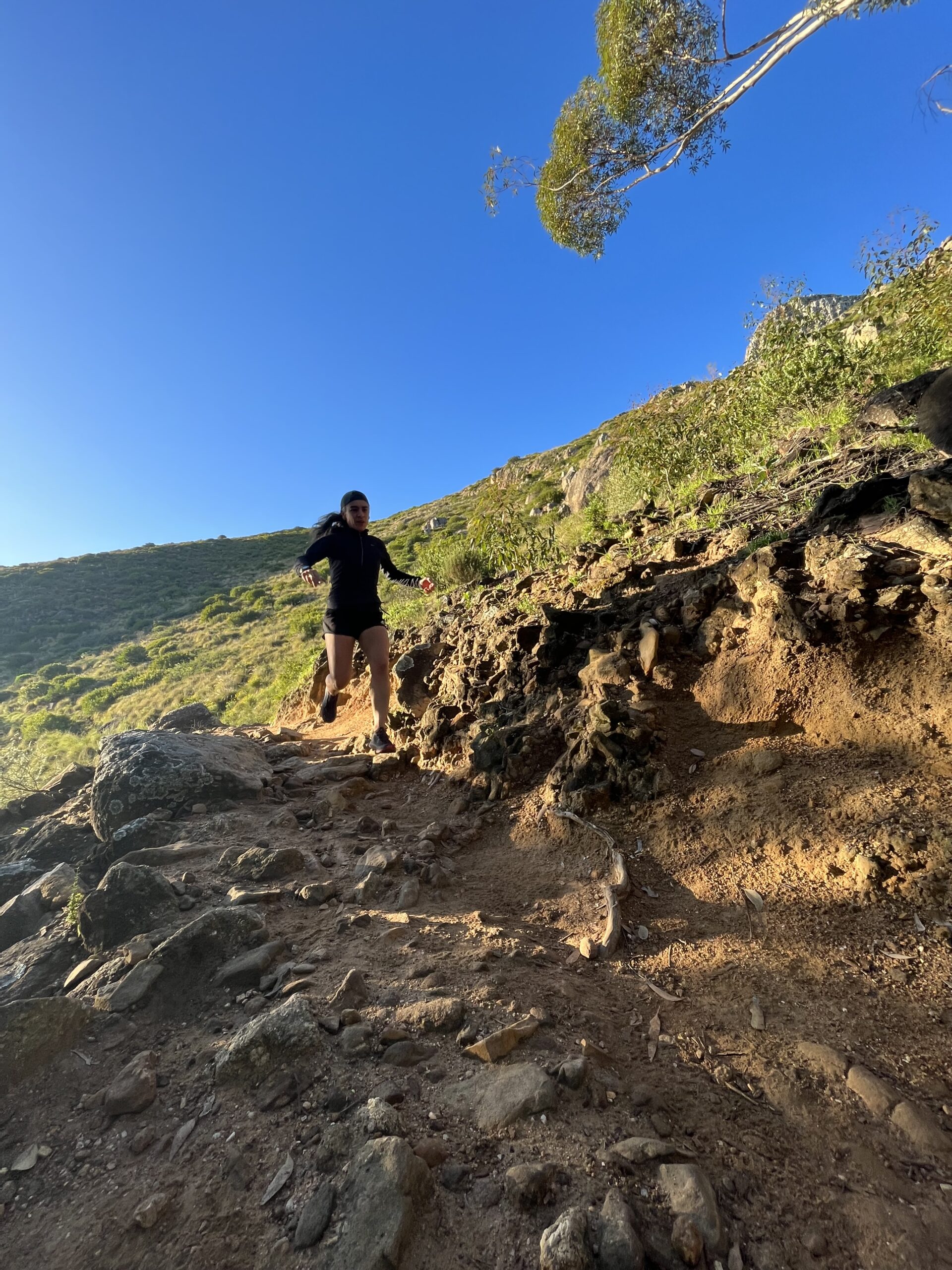
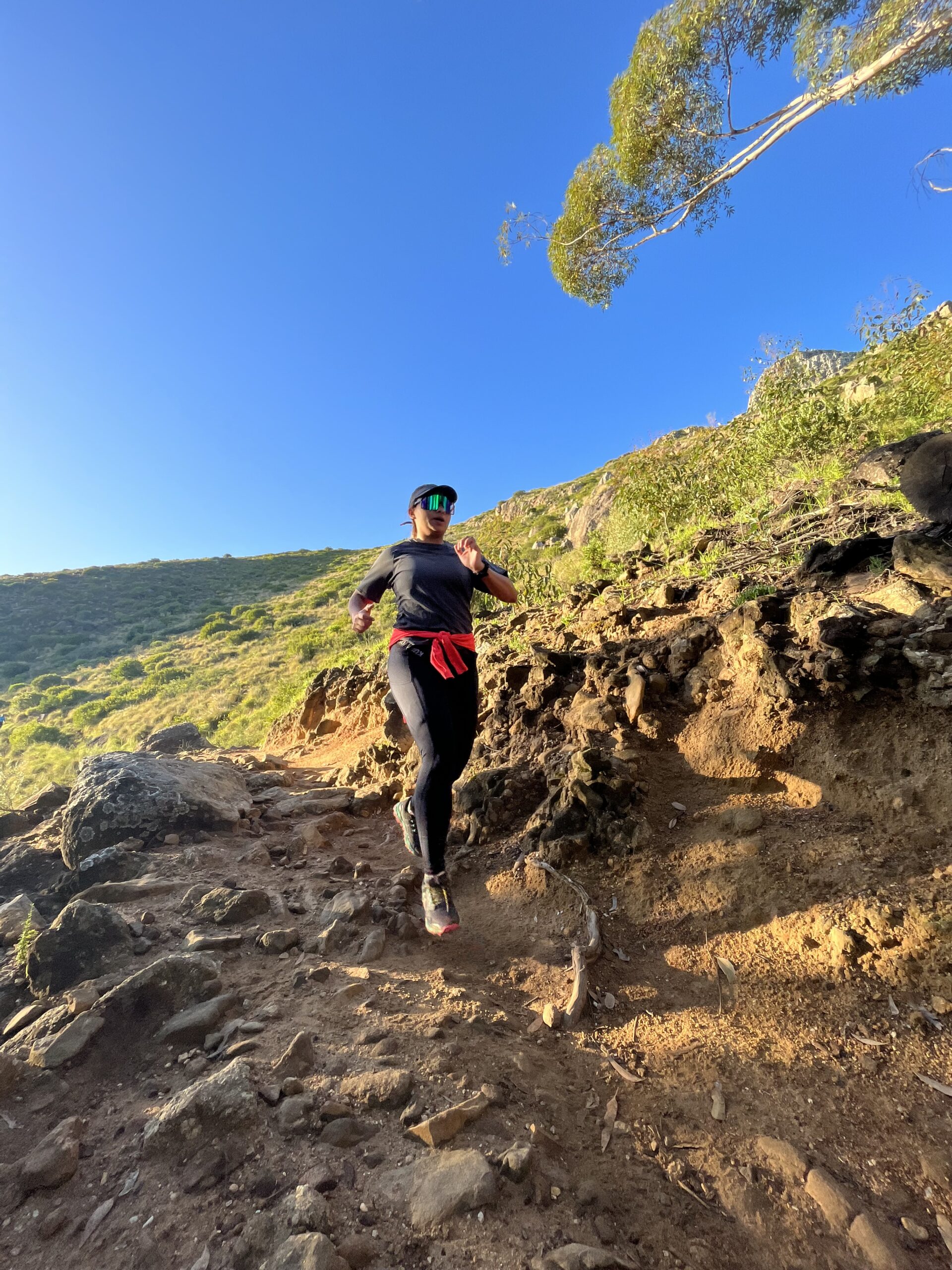
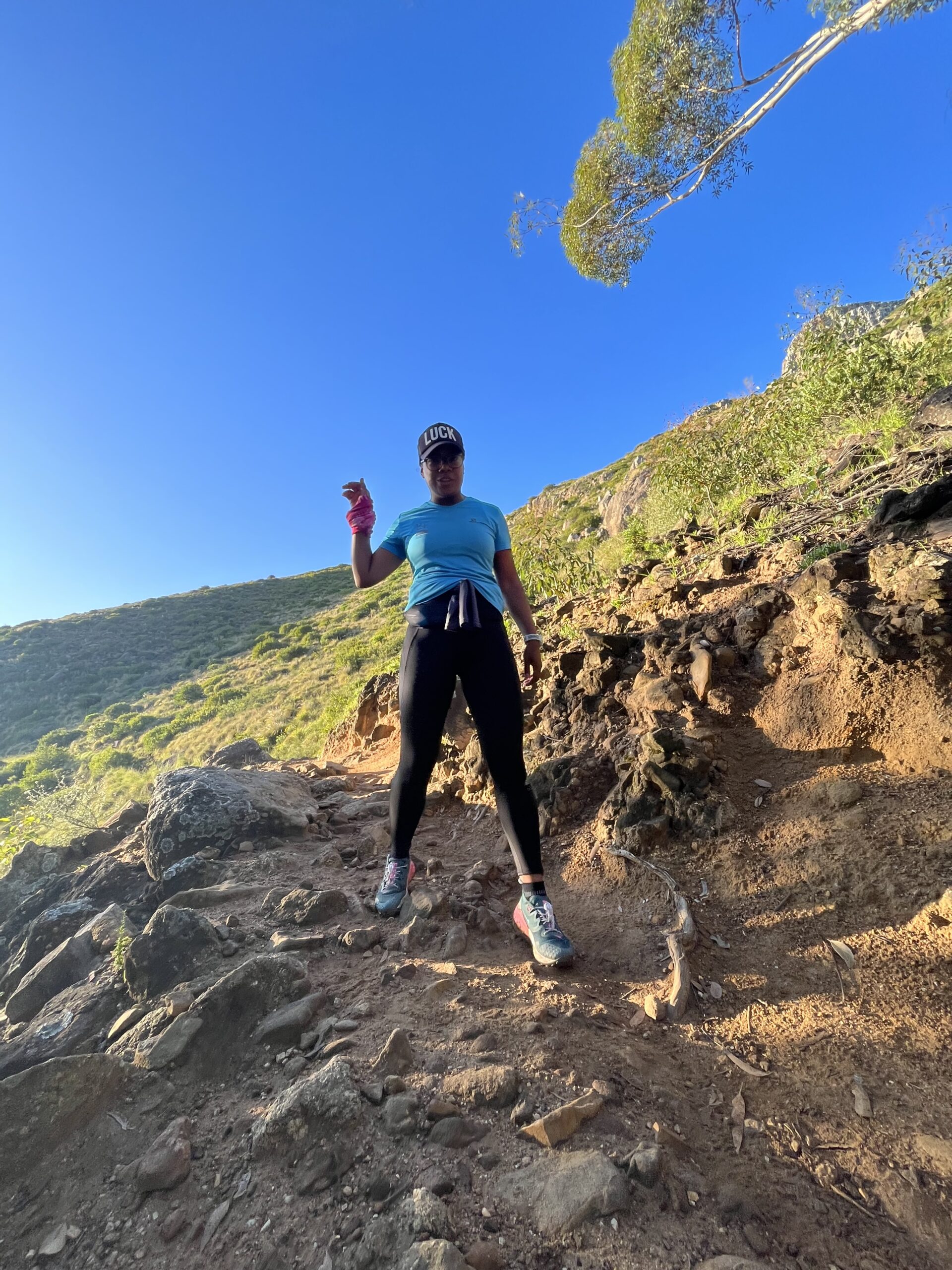
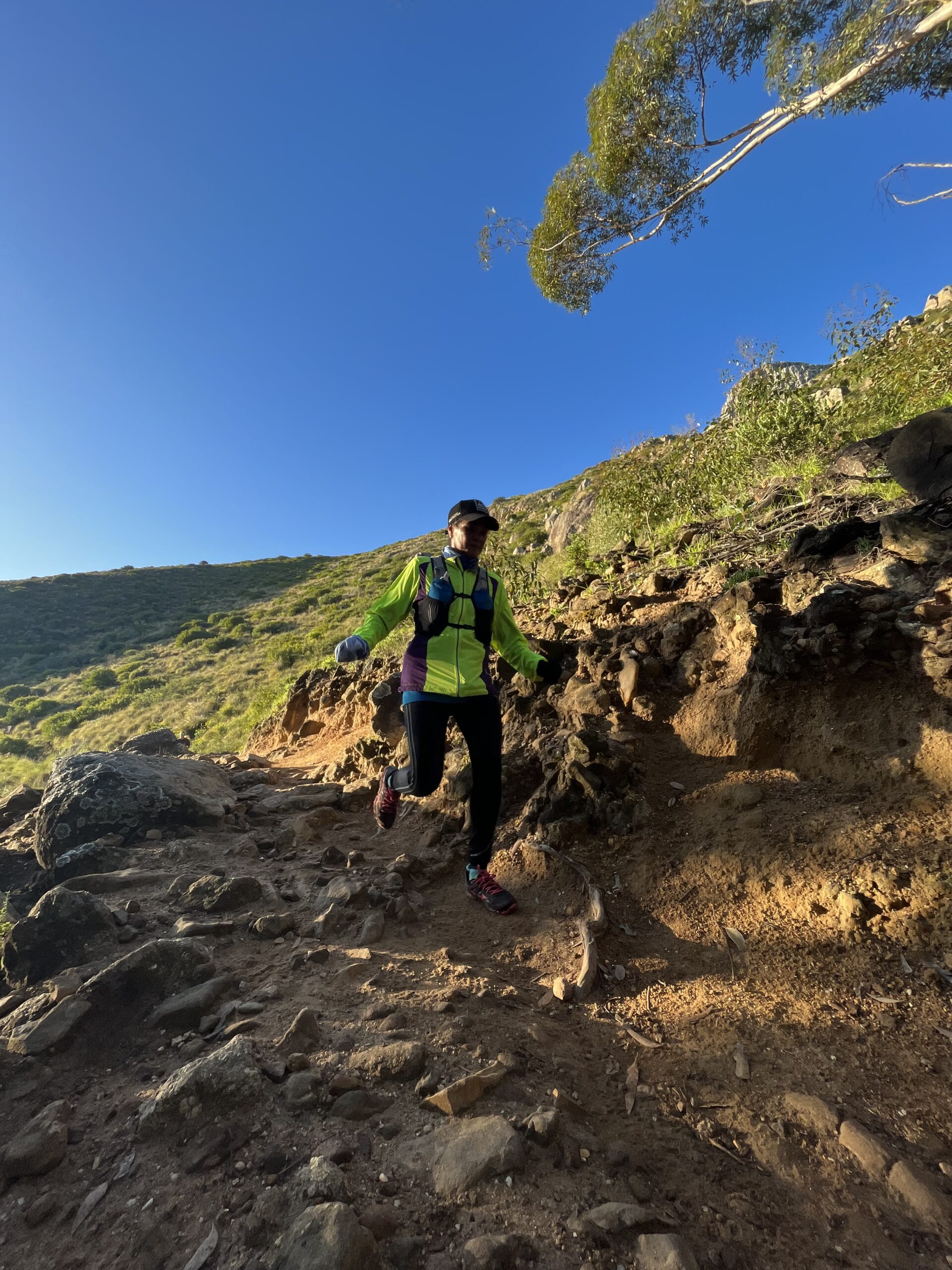
As the saying goes “What goes up must go down”. The best part of a brutal trail climb for some is the view from the top and for others its the faster descent back down but how do we make the most of the descent?
Here are three tips that can help you improve your downhill running
For an optimal downhill running technique one should focus on:
- Engaging your core
- Looking down the trail
- Practicing a quick turnover
Engage Your Core
A strong and engaged core can make all the difference. Without going into a full anatomy lesson, your deep core muscles work together to provide much needed stability while you continually impact the ground and propel forward.
If your core is not activated your body relies on larger larger muscles to provide stability, which can lead to muscle tension at best, and alignment issues and injuries at worst.
Engaging your core also ensure good posture and helps keep your hips and centre of gravity forward. This becomes especially helpful when running on changing trail surfaces. A stable core will allow you to move almost as nimbly as you would if you were running on a solid road.
Look Down the Trail
This may seem obvious but it can make all the difference. Knowing what’s ahead of you and being able to choose a good line to run can help improve your descending especially on trick descents.
Practice a Quick Turnover
Being light on your feet and having a quick turnover/cadence while running downhill will help reduce your ground contact time and help you stay nimble. This will help you reduce the landing force going through your body and put less pressure on your joints and muscles. In addition to that if you take quick steps even if you hit something you weren’t expecting, you have already transitioned to the other foot and have enough time to react and stay upright and stable.
In addition to keeping the three points above in mind while running there are also some Drills and exercises you can do to help.
Downhill Running Technique Drills
Lateral/forward hops: This drill helps with a quick tempo and core stability. The goal with this is to stay tall the whole time and keep your feet glued together. This is not a squat exercise. Start with 20 seconds, and work up to 45 seconds. You can also progress this further by hopping with one foot.
Supine Marching: This exercise will strengthen your core. Make sure you’re engaging the deeper muscles by pulling your belly button toward your spine.
Grassy hill repeats: Find a grassy hill (golf courses or parks work well) and run down practicing quick feet. Using a hill without additional obstacles to start will give you confidence to look farther in front of you; then you can tackle more technical trails. Start with short repeats (30 to 60 seconds)